Indian Green Coffee Beans in Europe | India, Unblended
Posted by Admin
India, Unblended: Rediscovering Indian Green Coffee
For more than a century, Indian green coffee has done its best work out of sight, inside other people's blends. We traced one season, from the first ripe cherry to the day the coffee lands in Europe, to see what it looks like on its own.
Indian green coffee has been sailing to Europe since the days of wooden ships. In the 1800s, the long voyage round the Cape gave it a softness and depth that European drinkers came to love. That affection never really faded.
Today, Indian green coffee is still part of Europe's coffee culture, often in the blends roasters rely on most, for body, crema and a gentle, chocolatey warmth. Italian espresso, in particular, owes it a quiet debt.
But the story has grown since those early voyages. There are new varieties, younger growers, remarkable robustas and fresh ideas coming out of India's coffee hills every season, all of it shaping the green coffee that reaches Europe.
So we thought it was time to catch up with an old friend and see what Indian green coffee has to say today.
India in five numbers
403,000 tonnes: the crop harvested in early 2026, by the Indian Coffee Board's estimate. Roughly seven bags of green coffee in ten are robusta.
368,000 tonnes: where trade estimates now put the 2026-27 crop, after a weak monsoon.
407,000 tonnes: India's record coffee exports in the year to March 2026, led by Italy, Germany, Russia, Belgium and Turkey.
98%: the share of Indian coffee holdings smaller than 10 hectares.
6: GI-protected Indian coffees, from Coorg arabica to Monsooned Malabar.
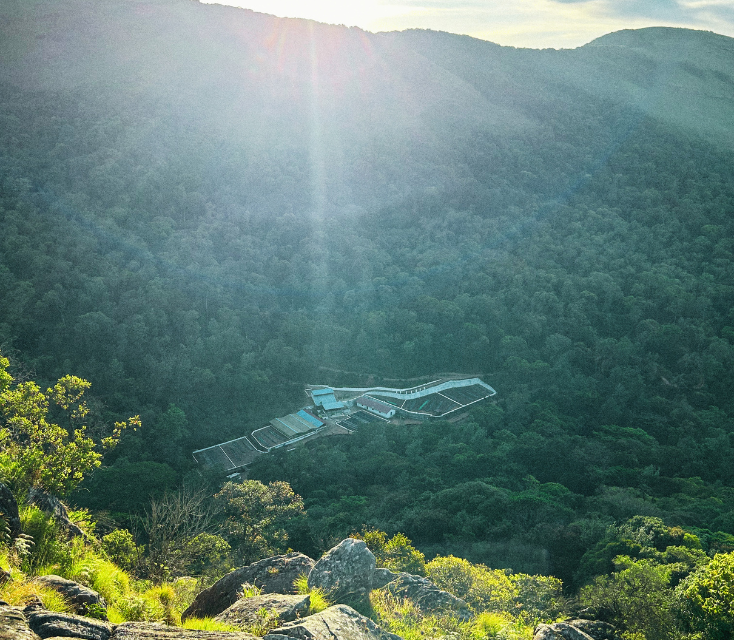
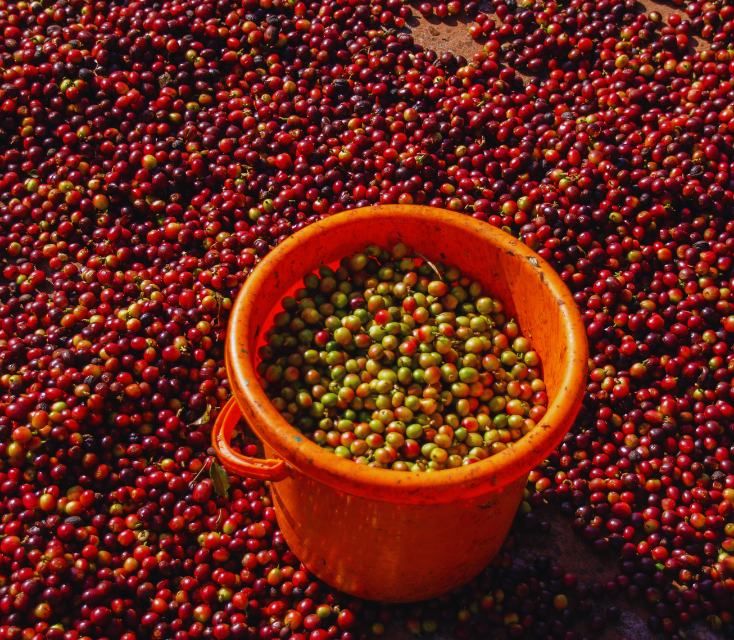
The day starts early in the Western Ghats. At half past six the mist is still lying in the valleys and the pickers are already moving down the rows, baskets on their hips, calling to each other across the bushes. Their hands are quick but fussy. Red cherries go in the basket. Anything still green stays on the branch for the next round, a week or two later.
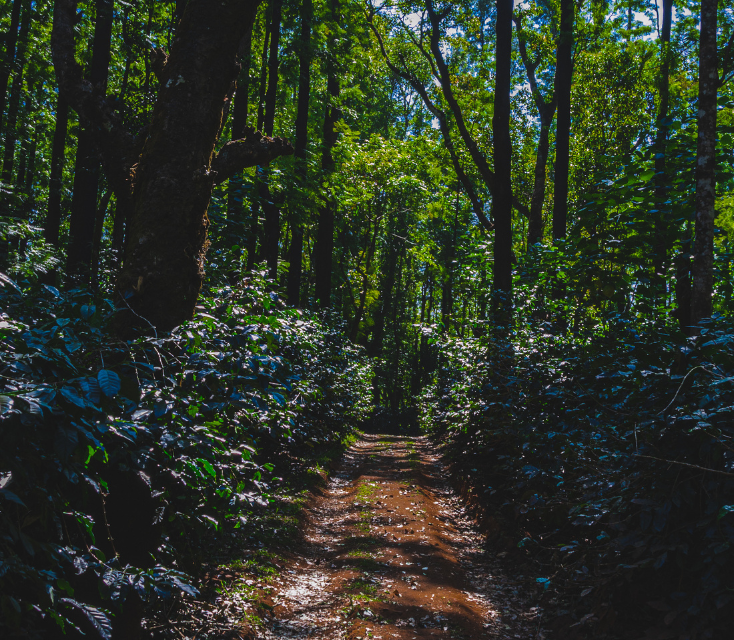
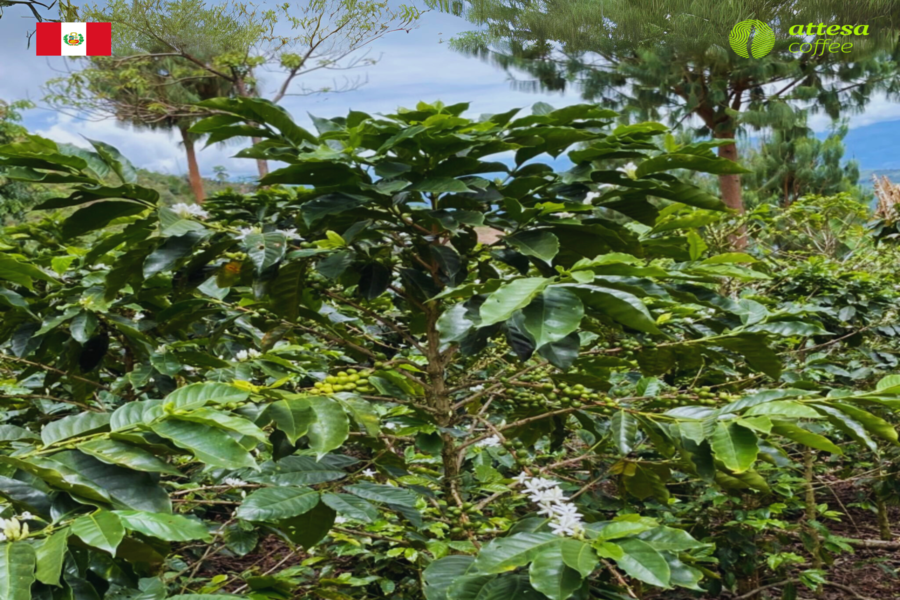
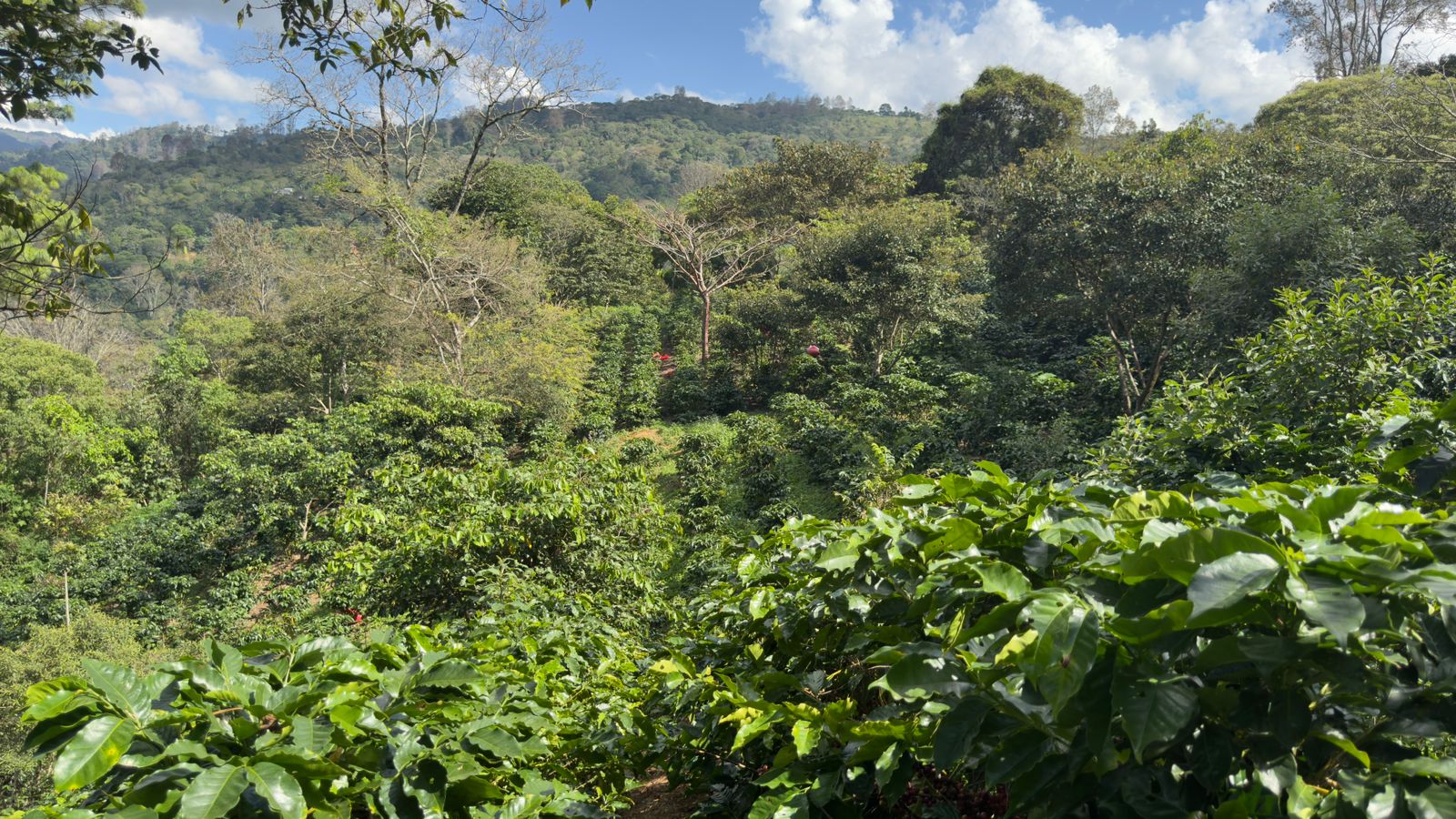
The first thing a visitor notices is the shade. Indian coffee doesn't grow in open rows under a hard sky. It grows in a forest. Tall native trees and silver oak form a ceiling far overhead, a second layer of shade trees sits beneath them, and the coffee lives in the cool, broken light underneath. Black pepper vines wind up the trunks. Cardamom fills the damp corners. At the edge of the plot, somebody's orange trees are heavy with fruit. The Coffee Board counts close to fifty species of shade tree across India's coffee land, and on one estate you can easily walk past a dozen.
Nobody planted it this way to impress a buyer. It is simply how coffee has always been grown here, and it earns its keep. The canopy keeps the soil cool through the dry months, the pepper and cardamom pay the bills in a poor coffee year, and the cherries ripen slowly, so the sugars have time to build in the seed that will become green coffee. This is also a UNESCO World Heritage landscape, so not all the neighbours are human. Hornbills crash around in the fig trees. Malabar giant squirrels scold the pickers. In some valleys elephants still use the old paths through the coffee, and planters long ago learned to work around them.
November belongs to Arabica. It comes first, from the higher ground of Chikmagalur, the Bababudangiris, Coorg and the Nilgiris, and from Araku Valley across the country in the Eastern Ghats. The Bababudan hills are where Indian coffee began. The story goes that in the 17th century a Sufi saint, Baba Budan, came home from pilgrimage with seven coffee seeds hidden in his robes and planted them on these slopes. Four Indian arabica regions, Coorg, Chikmagalur, the Bababudangiris and Araku Valley, now hold Geographical Indication status, the same kind of protection Europe gives Parma ham.
Walk the rows with an Indian grower and you'll hear them talk about their trees the way a winemaker talks about vines. Leaf rust reached India early, so breeders at the Central Coffee Research Institute in Balehonnur have been developing their own arabicas since the 1940s. S795, the old reliable, is everywhere, and in good hands it gives a sweet, rounded cup with mocha and a citrus edge. SLN 9 has the Ethiopian landrace Tafarikela in its family tree, and in a good year it is the most elegant coffee India grows: floral, berry-bright, almost tea-like. Chandragiri, a younger Sarchimor, keeps turning up in replanted blocks on the high slopes and, processed with care, can be startlingly juicy. Here and there the old Kent variety hangs on, kept by growers who like the cup too much to pull it out. All four are names worth watching for on an Indian green coffee offer list.
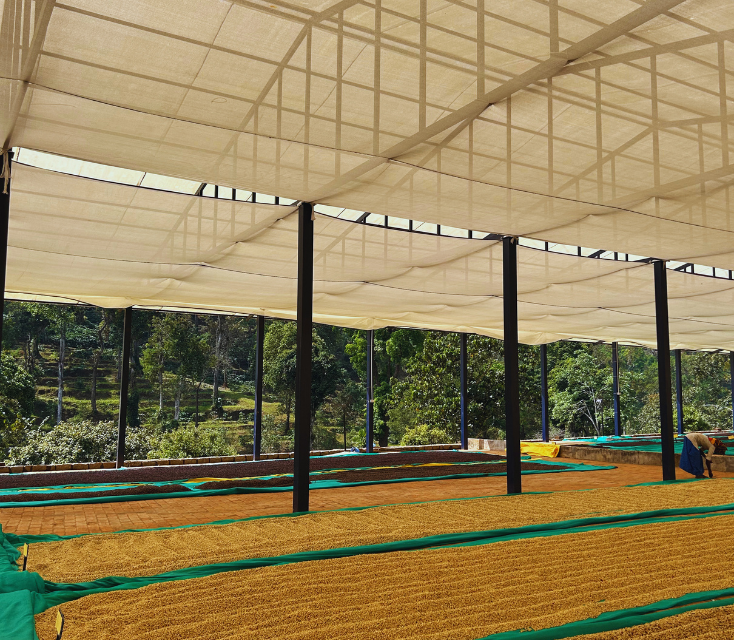
Most Indian coffee is grown by small farmers. Around 98 percent of holdings are under ten hectares, and plenty are two or three hectares of family land, worked alongside other crops and other jobs. Above them sit the estate families, some now in their fourth or fifth generation on the same hillside, with their own pulping sheds, drying yards and, more and more often, their own cupping rooms.
For a long time they all shared the same frustration. However carefully picked and processed, the green coffee usually left the district as a grade on a contract, pooled with hundreds of other lots. The work vanished somewhere between the hill and the port.
This is where the new generation comes in. Over the past decade, a good number of growers' sons and daughters who left to study engineering, hotel management or finance have come back to the family land. They arrived with laptops and moisture meters and started asking awkward questions. Why do we sell everything as one grade? What if we kept the top block separate? What would a roaster in Copenhagen actually pay for this?
Their fingerprints are all over Indian green coffee now: separated microlots, fermentation trials, Instagram feeds full of drying beds, and a growing habit of sending samples straight to Europe and asking for blunt feedback. Spend five minutes with any of them and the same wish comes up. They want their green coffee to travel with its name on it.
By the time the Arabica is in, the lower slopes are turning red. Robusta ripens later, from December into March, and in Wayanad, southern Coorg and the warmer valleys of Kerala and Karnataka it is the main event. India grows far more of it than arabica: around 284,000 of the 403,000 tonnes harvested in early 2026.
Robusta has spent a long time typecast as the filler in the blend, and Indian robusta has been arguing with that reputation for decades. It grows under the same forest shade as the arabica. On the better farms it is hand-picked in several rounds, ripe cherry only, which is more attention than robusta gets almost anywhere else. And India has been washing it for over forty years.
Washed robusta was close to unheard of when Indian growers started producing it in the early 1980s. By the end of that decade the Coffee Board had made it official with Robusta Kaapi Royale, a premium washed grade with fermentation written into its rules. Kaapi Royale later became one of the first coffees recognised under the Coffee Quality Institute's Fine Robusta standard. Today a handful of estates are going further, with honey and natural fine robustas.
For specialty roasters, that opens a door: robusta on the menu by name, as a single origin or as a deliberate part of the espresso. For commercial roasters, Indian robusta is still what it has always been, a dependable source of body, crema and chocolate that behaves the same way bag after bag, which is exactly why so many European blends lean on it. The market has noticed. India's robusta green coffee exports rose about 36 percent in the first four months of 2026.
There is a longer game, too. Robusta copes with heat far better than arabica, and the weather in coffee country isn't getting any calmer. A robusta grown with this much care looks like a sensible bet on the next twenty years.
The tank shed
Every estate has a shed. On most, it holds pulpers, sacks and a tired tractor. On a growing number in Chikmagalur and Sakleshpur, it now holds rows of sealed blue drums and stainless-steel tanks, a pH meter, and a whiteboard covered in fermentation times.
Indian producers have taken to green coffee processing experiments with real appetite. Anaerobic naturals, carbonic maceration, yellow, red and black honeys, yeast inoculation, the odd co-ferment with fruit or sugarcane: if a technique has made headlines elsewhere, someone in Karnataka is trying it, and increasingly on robusta as well as arabica. The Indian green coffee lots we have cupped here in Europe run from raw mango and pomegranate to spiced wine and grape juice.
Not every trial works, and the producers are the first to say so. The ones we find most exciting use fermentation to bring out what their hillside already does well rather than to cover it up. If you want to know how we tell the two apart, our guide to co-fermented, infused and inoculated coffees walks through it.
Then the monsoon arrives, and for one Indian coffee it is the whole point.
Remember those wooden ships from the start of this story? Back then, Indian coffee bound for Europe spent months at sea on the way round the Cape of Good Hope. Damp sea air soaked into the cargo, and by the time the sacks were unloaded the beans had swollen, turned pale gold and lost most of their acidity. Europe loved the result. When steamships cut the journey short, the flavour disappeared, and buyers complained.
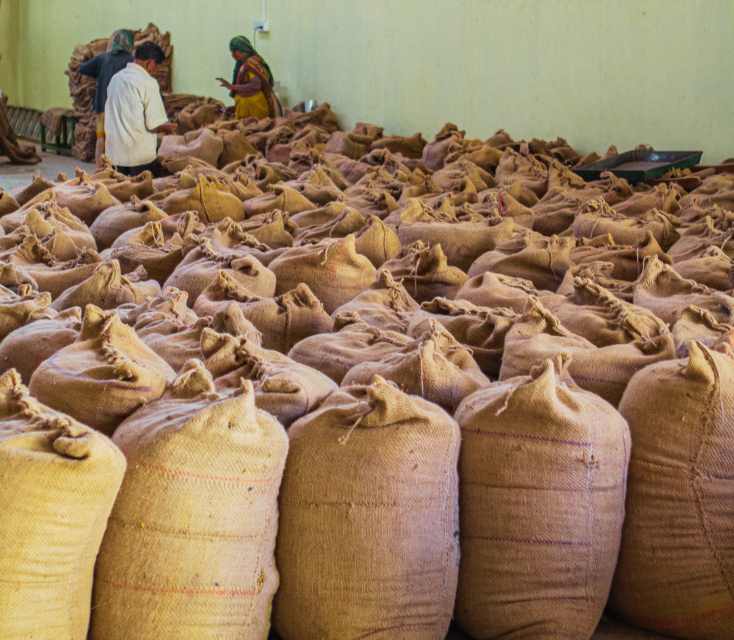
So India brought the voyage ashore. Every year from June to September, in open-sided warehouses on the west coast, mostly around Mangalore, natural-processed green coffee is spread across the floor to meet the southwest monsoon. For twelve to sixteen weeks warm, wet wind blows in off the Arabian Sea. Workers rake and turn the beans, bag and re-stack them, until every bean has had its share. At the end they are nearly twice their original size and the colour of straw.
This is Monsooned Malabar, a green coffee protected by its own GI and made from both arabica and robusta. It is earthy, spicy and syrupy, with almost no acidity, and it splits a cupping room down the middle. Roasters have been buying it since at least the 1930s, and a small share in an espresso blend gives a depth that is hard to find anywhere else.
The same wind decides next year's harvest. Coffee trees need steady rain from June onwards to fill the cherries that set after the spring blossom. In 2026 the monsoon arrived thin. June rainfall in parts of Kodagu and Kerala ran 35 to 45 percent below normal, growers reported more pest pressure, and arabica was already heading into a natural off year after a strong crop. Trade estimates for the 2026-27 harvest have slipped to around 368,000 tonnes.
For roasters across Europe planning their Indian green coffee, that matters. A smaller crop, picked from November 2026 into early 2027, means the best green coffee lots will be claimed early. It also shows where Indian coffee is heading. Shade forests that keep the ground cool, robusta that tolerates heat, and the Coffee Board's variety trials with World Coffee Research are all part of how Indian growers are getting ready for a less predictable climate.
So what does Indian green coffee taste like once it finally gets a table to itself?
Think of it as a family resemblance rather than a single flavour. The washed arabicas tend to be sweet and settled, with chocolate, citrus and a soft spice that plenty of cuppers connect, only half joking, to the pepper and cardamom growing a few metres away. The best SLN 9s and Chandragiris go further. This season our cupping forms have filled up with tangerine, red currant, stewed plum, red grape, blackberry and tamarind, with scores in the mid-80s. Araku Valley coffees, grown by Adivasi communities in the Eastern Ghats, bring grapefruit and a sweetness Indians compare to jaggery. The fine robustas sit lower and rounder, with cocoa, roasted nuts, caramel and a thick, creamy body. And Monsooned Malabar does its own thing entirely.
"Soft and low-acid" used to sum up Indian green coffee in a single breath. It doesn't any more.
Indian green coffee: a few questions worth looking at
As a green coffee importer, we spend a lot of our time listening, on sample calls, over the cupping table and in our inbox. Some questions about Indian green coffee keep coming up this season, and a few of them are worth a closer look. Perhaps you’ve been wondering about them too.
“Is fine robusta worth a place on our menu?” - It’s the question we hear most from specialty roasters right now. With arabica prices still stubborn, many are taking a second look at robusta, and Indian fine robusta is often where that look begins. Shade-grown, washed, hand-picked and backed by decades of quality grading, it’s an easy green coffee to put in front of a sceptical team. Commercial roasteries have known its worth for years. India’s robusta exports rose about 36 percent in the first four months of 2026, and a good share of those green coffee beans found their way into European blends.
“Why are Indian prices holding firm?” - India exported a record of around 407,000 tonnes of coffee in the year to March 2026, and Indian green coffee still carries a premium in Europe for its consistency. Many of the roasters we work with have shortened their buying cycles to cope with the market, which is why we always encourage early conversations about volumes and timing.
“Can we use Indian coffee beyond the blend?” - We’re hearing this more and more. Europe has long been the main home for Indian green coffee: around 60 percent of India’s coffee exports go to the EU, with Italy, Germany and Belgium among the biggest buyers. What’s changing is how it’s used. Roasters across Europe are increasingly keen to put Indian green coffee beans on the menu by name, not only in the blend. With so much interest in the same coffees, the standout lots tend to go to those who plan ahead.
“How is the 2026-27 harvest looking?” - After a thin 2026 monsoon and an arabica off year, trade estimates have dropped to around 368,000 tonnes. Nobody we speak to is expecting a shortage, but the best green coffee lots are likely to be claimed sooner than usual.
“Is Indian coffee ready for the EUDR?” - With the EU Deforestation Regulation applying from 30 December 2026, this comes up in almost every conversation. The good news is that India’s forest-grown green coffee looks like an asset rather than a concern. The Coffee Board has been registering farms on a traceability platform and has launched its own sustainability standard, INDICOFS. The remaining work is mapping thousands of smallholders, and that’s where close partnerships at origin make all the difference.
“What’s next for Indian varieties?” - This one usually comes from those thinking a few seasons ahead. India’s coffee research institute is trialling global cultivars alongside its own SLN 9 and Chandragiri with World Coffee Research, with new climate-ready varieties expected by the end of the decade. India bred for rust resistance before most origins did, and it may well be early on climate resilience too.
Unblended
It has been a long voyage since those wooden ships.
Picture the next sack of Indian green coffee arriving in Europe with a name on it: a region, a variety, the family or community who grew it, the month it was picked. The coffee inside wouldn't change. It would still add weight to a blend and hold the crema. But the grower in Chikmagalur or Araku would see their work credited on a café menu in Amsterdam or Berlin, and the roaster would have a story no other origin can tell. Forest gardens. Elephants on the coffee paths. A saint with seven seeds. A monsoon that once crossed an ocean.
For growers, recognition tends to bring better prices, and better prices pay for shade trees, drying beds and a reason for the next generation to stay. For specialty roasters, it means arabicas with real character and Robusta that change minds. For commercial roasters, nothing is lost. Indian green coffee keeps doing what it has always done, with clearer origins and traceability that stands up to scrutiny.
That is the bridge we try to be. On one side, Indian producers who want their coffee known and valued. On the other, roasters across Europe who are looking for green coffee beans with character, consistency and a story they can stand behind. As your green coffee importer, we spend our days between the two, listening to both, so each lot of Indian green coffee arrives in Europe with its name, its story and its quality intact.
From the hills to your roastery: Indian green coffee beans in Europe with Attesa
If you are planning the 2026-27 season, these are the dates worth pinning:
From October 2026: this year's freshly monsooned Malabar ships
November 2026 to March 2027: harvest at origin.
January to April 2027: pre-shipment green coffee samples and pre-orders with Attesa
April to September 2027: new-crop arabica, then robusta, arrives in Europe
With a smaller crop on the way, the standout Indian green coffee lots will go quickly. Join our newsletter to make sure you're one of them - Subscribe Now!
We'd love to show you our indian green coffees and you can.Request green coffee samples of our current Indian lots or write to us at hello@attesa.co, and let's take Indian green coffee out of the blend together.
Nandan Thogrihunkal - Chandragiri AA, Washed Pineapple, stone fruits, and red berries with a velvety mouthfeel and an orange-chocolate aftertaste.
Baba Budan Giri Range - SL795, Washed Green apple, stone fruits, and vanilla with a creamy body and a grape-juice finish. A clean, elegant Indian single origin.
Attikan Estate - SL795, Anaerobic Washed Tangerine, red currant, and maple syrup, juicy and bright with a citrus-tea aftertaste.
Gungegiri Estates - SLN9, Dual Fermented Washed Blackberry, tamarind, and florals with a velvety mouthfeel and a clean, tea-like finish.
Karadykan Estates - SLN9, Washed, Yeast Inoculated Grapefruit, raspberry, and florals with a round body and a vanilla aftertaste. Lively and clean.
Kelagur Heights - Chandragiri & SLN9, Anaerobic Natural Stewed plum, strawberry, and dark chocolate with a winey mouthfeel and a brownie-ish finish. Our boldest Indian natural.
Plantation AA - Blend, Washed Grain chocolate, malt syrup, and pineapple with a buttery body and a brown-sugar finish. A dependable, great-value Indian base.
Monsooned Malabar AA - Blend, Monsooned Cedar, tobacco, and warm spice with a rich mouthfeel and a long finish. The classic, unmistakable monsooned cup.
Gungegiri Estates - Fine Robusta, Pichia Washed Dark fruits, liquorice, and black forest cake with a rich body and a long, sweet finish. Robusta with real character.
Karadykan Estates - Fine Robusta, Natural, Banana Leaf Co-Fermented Lemon, apple pie, and vanilla, creamy with a spiced-tea aftertaste.
Cherry AA - Robusta CxR, Natural Liquorice, dark chocolate, and warm spice with a creamy body and a hazelnut finish. A strong, low-cost espresso workhorse.
Cherry AA - Robusta Blend, Natural Liquorice, dark chocolate, and warm spice with a creamy body and a hazelnut finish. Last bag of the previous crop.
Cherry AB - Robusta CxR, Natural Roasted nuts, cacao nibs, and warm spice with mild acidity and a creamy body. Our most affordable blend booster.
Spot - arriving November, Warsaw, PL Warehouse
Salawara Estate - Chandragiri, Washed, Yeast HSD Inoculated Yogurt, red grape, and cherry syrup with a creamy mouthfeel and a berry-brownie finish.
Salawara Estate - Chandragiri, Washed, Yeast Inoculated Green apple, lemon tea, and grapefruit with a clean mouthfeel and a citrus aftertaste. Bright, crisp, and refreshing.
A traveler's guide to India's green coffee regions
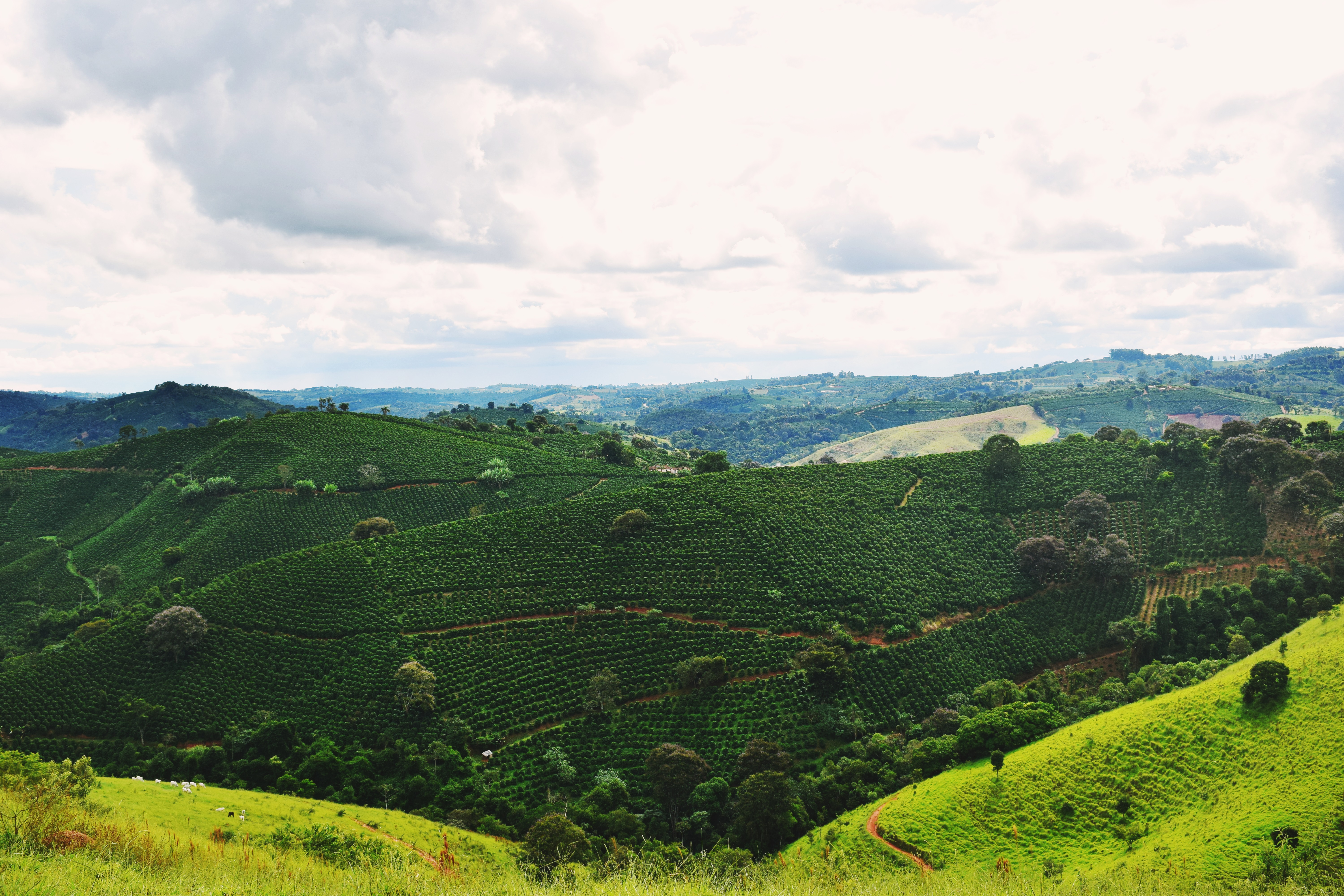
India's coffee grows in three broad zones: the traditional south, the Eastern Ghats and the Northeast. Karnataka alone produces around 70 percent of the crop. If you only had a week to find your next Indian green coffee, this is where we would send you.
Bababudangiris, Karnataka (GI). Where it all began, at 1,000 to 1,500 metres. Full-bodied arabica with chocolate and soft acidity. Deer graze between the rows.
Chikmagalur, Karnataka (GI). India's busiest specialty district, growing both species at 700 to 1,200 metres. Many of the processing experiments start here. Look out for peacocks.
Coorg (Kodagu), Karnataka (GI). The largest coffee district in the country: mostly robusta, with sweet arabica higher up. Honey, oranges and the occasional elephant on the estate road.
Manjarabad (Hassan and Sakleshpur), Karnataka. Gentle, stream-cut hills at 900 to 1,100 metres, home to some of India's best-known fine robustas and a lot of forward-thinking estates.
Wayanad, Kerala (GI). Robusta heartland at 600 to 900 metres, grown hand in hand with pepper. Bold and chocolatey. This is tiger country.
The Tamil Nadu hills. Nilgiris, Anamalais, Pulneys and Shevaroys: high-grown arabica scattered across four ranges from 600 to 2,000 metres, with pockets of the heritage Kent variety. Leopards, gaur and, once every twelve years, the blue Kurinji bloom.
Araku Valley, Andhra Pradesh and Odisha (GI). Eastern Ghats arabica at 900 to 1,100 metres, grown by Adivasi communities. Grapefruit and a jaggery-like sweetness.
Biligiris and Travancore. Two smaller regions: high-grown arabica on the Karnataka-Tamil Nadu border, and soft, mellow robusta in Kerala's wet hills.
The Northeast. A young region across Assam, Nagaland and their neighbours. Small, but growing.
The Malabar coast. Not a growing region but a finishing one: the warehouses where Monsooned Malabar (GI) is made.
Frequently asked questions about Indian green coffee
Where can I buy Indian green coffee beans in Europe?
If you’d like to talk through Indian lots for the 2026-27 season, we’re always happy to put samples on the table Is Indian green coffee good for specialty roasting?
Yes. Traceable lots from varieties such as SLN 9 and Chandragiri, with careful washing or newer processing methods, regularly cup in the mid-80s, with notes from citrus and red fruit to chocolate and spice.
What does Indian coffee taste like?
Washed arabicas are sweet and balanced, with chocolate, citrus and soft spice. Naturals and experimental lots bring red fruit and tropical notes. Fine robustas are creamy, nutty and chocolatey. Monsooned Malabar is earthy, heavy and very low in acid.
When is the best time to buy Indian green coffee?
For the 2026-27 crop, arabica is harvested from November 2026 to January 2027 and robusta from December 2026 to March 2027. Samples arrive from January 2027 and green coffee reaches Europe from April 2027, so the best lots are usually secured between January and April 2027. With a smaller crop expected after the weak 2026 monsoon, earlier is better.
What is Monsooned Malabar coffee?
A GI-protected Indian green coffee. Natural-processed green coffee beans are exposed to monsoon winds in open-sided warehouses on India's west coast for 12 to 16 weeks, producing a pale, swollen bean with very low acidity and a heavy, earthy, spicy cup.
Is Indian robusta specialty coffee?
The best of it is. India has washed robusta since the early 1980s, and its premium Kaapi Royale grade was among the first coffees recognised under the Fine Robusta standard. Shade-grown, hand-picked Indian fine robusta offers cocoa, nuts and a creamy body without harshness.
Is Indian coffee EUDR compliant?
India is well placed, because its coffee grows under forest shade rather than on cleared land, and the Coffee Board is registering farms on a traceability platform. The EUDR applies from 30 December 2026 for large operators and 30 June 2027 for micro and small businesses, so ask your green coffee supplier for farm-level geolocation data.